What is a Box Spread?
 Published Sep 16, 2026
 Updated Sep 17, 2026
A box spread combines two vertical spreads to create a fixed expiration value, allowing options prices to express an implied borrowing or lending rate.
- A box spread combines a bull call spread and a bear put spread using the same strikes and expiration.
- When constructed correctly, the position has a fixed value at expiration regardless of where the underlying finishes.
- The difference between the box price today and its known expiration value represents an implied financing rate.
How a Box Spread Is Built
A box spread is a four-leg options position created by combining a bull call spread and a bear put spread with the same two strike prices and the same expiration date. When the legs are matched correctly, the payoff at expiration is fixed regardless of where the underlying market finishes.
Assume an index has two strikes at 7,700 and 7,800. A long 7,700/7,800 call spread pays as much as 100 points if the index finishes at or above 7,800. A long 7,800/7,700 put spread pays as much as 100 points if the index finishes at or below 7,700. Between the strikes, the two spreads offset each other so their combined value still equals 100 points at expiration.
The result is a position with a known terminal value. The question becomes how much the trader pays or receives today for that future cash flow. That turns the box into an interest-rate trade rather than a directional trade.
Long Box Versus Short Box
A long box is purchased for a debit and receives the fixed value at expiration. If a 100-point box costs 97.50 today, the trader pays 97.50 points and receives 100 points at expiration. The 2.5-point difference is the return earned for committing the capital over the life of the trade.
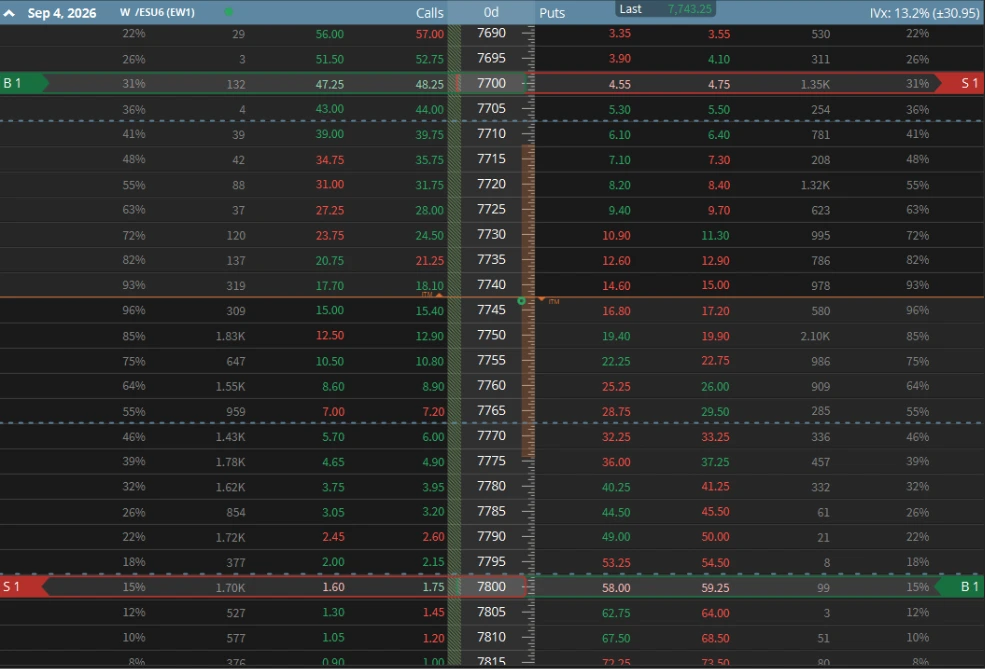
A short box reverses the position. The trader receives cash upfront and owes the fixed box value at expiration. If the trader sells the same 100-point box for 97.50, the position brings in 97.50 points today and requires a 100-point payment at expiration. Economically, that resembles borrowing 97.50 now and repaying 100 later.
The implied interest rate depends on the difference between the current box price and its expiration value, along with the time remaining. Traders compare that rate with alternatives such as Treasury bills, secured financing or brokerage margin rates.
Why European-Style Index Options Are Preferred
Box spreads can be constructed with many options, but European-style, cash-settled index options are generally cleaner for the strategy. European-style contracts can only be exercised at expiration, which removes early assignment risk. Cash settlement also avoids the need to deliver shares.
Those features are important because a box depends on all four legs remaining intact. With American-style equity options, one leg can be exercised early while the others remain open. Dividends and early assignment can alter the position before expiration and create financing or stock-delivery complications.
SPX options are a common example because they are European-style and cash settled. Traders still need to execute the four legs as a package and understand the account treatment, but the contract design makes the expiration payoff more predictable.
A Practical Box-Spread Example
Assume a trader constructs a 5,000/5,100 long box in an index option with six months until expiration. The strike difference is 100 points, so the box will settle for 100 points at expiration. If the trader pays 97 points for the package, the maximum future value is already known: 100 points.
With a $100 multiplier, the trader pays $9,700 and receives $10,000 at expiration, assuming the position is held and settles as designed. The $300 difference is the financing return. A short-box trader would take the opposite side, receiving roughly $9,700 today and owing $10,000 at expiration.
The quoted price is what determines the implied financing rate. A cheaper long box offers a higher return to the lender. A richer short box lowers the effective borrowing cost for the borrower. Small pricing differences can be meaningful because the payoff itself is fixed.
Risks and Practical Considerations
A box spread has a fixed theoretical payoff, but execution and account mechanics still matter. The four legs should be traded together because legging into the position exposes the trader to market movement between fills. Wide bid-ask spreads can also erase much of the financing advantage if the package is executed poorly.
Margin treatment varies by product, account type and broker. A short box creates a future obligation, and the broker may require substantial collateral or additional equity if the rest of the portfolio falls in value. The financing rate should therefore be compared after accounting for buying-power use, commissions and any operational constraints.
Taxes can also differ from the economics shown on the options screen, especially for index options with special tax treatment. Traders using box spreads for financing should understand the tax and accounting consequences before assuming that the implied rate equals the after-tax return or borrowing cost.
The box spread can be useful because it strips most directional exposure out of an options position and leaves a dated cash flow. Once that structure is clear, the trade becomes easier to evaluate: compare the cash exchanged today with the known amount due at expiration, then decide whether the implied rate is attractive relative to other financing choices.
Frequently Asked Questions
A box spread combines a bull call spread and a bear put spread using the same two strikes and expiration. The two spreads offset each other between the strikes so the combined payoff equals the strike width regardless of where the underlying finishes.
European-style, cash-settled index options can only be exercised at expiration, which removes early assignment risk and the need to deliver shares. This matters because a box spread depends on all four legs remaining intact until expiration.
The difference between what a trader pays or receives for a box spread today and its known fixed value at expiration represents an implied financing rate, which can be compared against alternatives such as Treasury bills or margin rates.
This content, including the use of actual symbols, any visual display or other reference to product, type of investment, strategy, or service offered, is for educational and informational purposes only. It is not, nor is intended to be, trading or investment advice or a recommendation that any investment product or strategy is suitable for any person.